Big Tech's Screen Time U-Turn: Real Change or Performance Art?
New wellness features are giving "we're sorry" energy

The AI that wants to break up with you
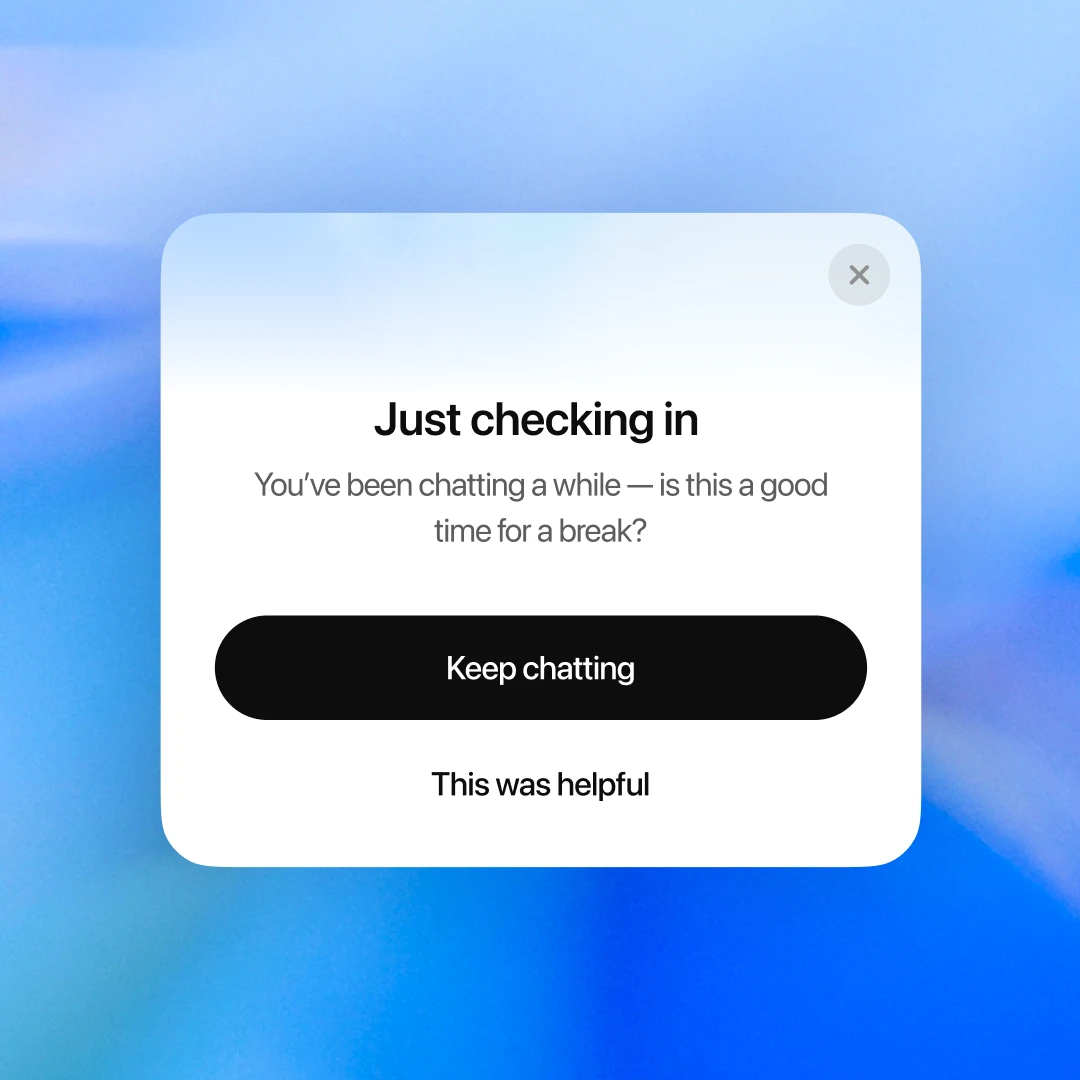
Yesterday, OpenAI flipped the script on 700 million users. Their latest update doesn't optimize for keeping you hooked, it literally trains ChatGPT to help you leave. The world's hottest AI just became that friend who grabs your phone at parties and says "enough."
The Great Metric Flip
OpenAI's bombshell
Here's the unexpected part: ChatGPT now measures success by how quickly users leave, not minutes spent. Those "gentle reminders" popping up in marathon sessions? They're not suggestions, they're the AI actively trying to log you out.
Think about that. 700 million weekly users, all being nudged to bounce faster. OpenAI's own blog admits they are optimizing for users who "leave once they've done what they came for." The biggest consumer AI tool is literally rewarding itself for losing your attention. What is this?
TikTok's cap you can crack
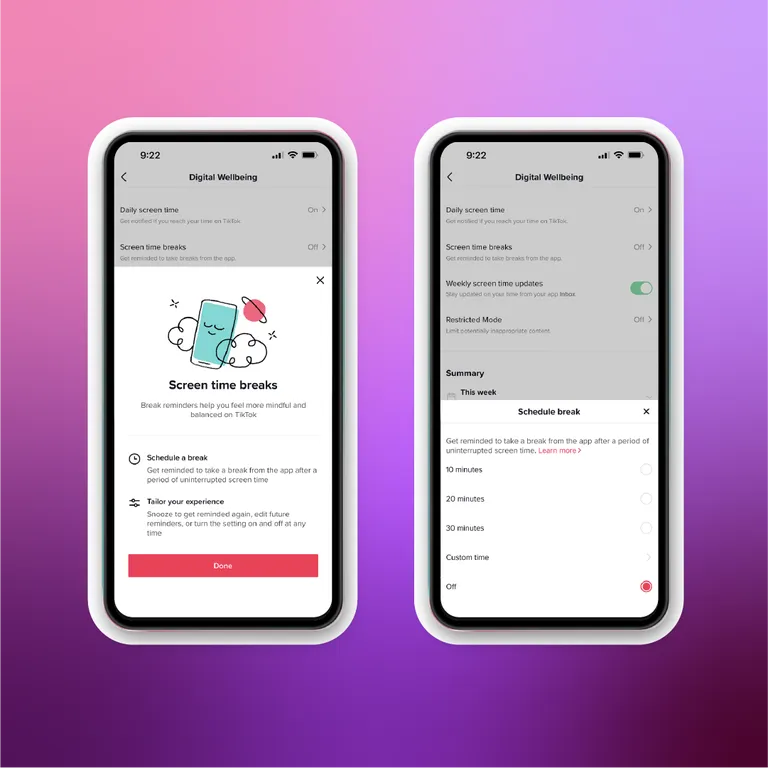
TikTok made headlines in March of 2023 with their automatic 60-minute daily limit for every account under 18. Sounds strict, until you learn the truth. Any teen can extend time with a single passcode. Internal docs revealed the goal was "improving public trust," not actually cutting usage. Yikes.
The credibility gap is massive. Parents sigh with relief thinking their kids are protected, while teens swipe straight past the barrier. Lawsuits in Kentucky and Texas now argue the feature is window dressing while teens still clock 6-10 hours a day on social apps.
Meta's mixed signals
Instagram's Quiet Mode, "Take a Break" banners, and parent-set daily limits are now global, the first of which launched back in 2021. Meta claims that 90% of U.S. teens who enable daily limits still use them 30 days later, a very rare retention stat for a wellness feature.
But here's the punch line: 42 states are currently suing Meta for designing addictive loops that override those very limits. The tools work if teens use them, but the app's entire business model still loves "almost constant" scrolling. It's like a casino adding exit signs while the slot machines get louder.
YouTube's Sleepy Eyes Revolution
YouTube has gone all-in on bedtime reminders, now appearing as full-screen takeovers across Shorts and long-form videos, with Take a Break defaulting to every 60 minutes. Both features are globally available and on by default for users under 18.
Starting August 13, 2025, YouTube will use AI to identify users under 18 regardless of the birthdate they provided, automatically enabling digital wellbeing features including bedtime reminders. Woah.
The platform had already fired off 3 billion break prompts by 2020. But here's the concrete imagery that haunts late-night scrollers: a giant clock overlaying the video you still watch past midnight. Researchers point out that users only have to click to close the banner, the onus is still on them to actually stop watching.
Ok so, what's actually changed (and what hasn't)
The new baseline is revolutionary: When the fastest-growing app trains its model to end conversations, every other platform gets hit with the "why don't you?" question from parents, regulators, and now investors. The narrative has shifted from growth-at-all-costs to sustainable engagement.
But the same old job remains: None of these guardrails lock you out for good. They just make the exit easier to see. As one researcher puts it: "These are all cosmetic things that may work for some people, but aren't really going to shift user behavior."
The heavy lift of actually choosing to log off, still belongs to you.
Why this is Gen Z's Berlin wall moment
As we all know, Gen Z is the first generation raised entirely inside the attention economy. Their parents had to learn social media; now they have to learn how to exist without it.
Now, even the algorithms are admitting what we’ve all been thinking: This isn't sustainable.
The average Gen Z-er spends 7+ hours daily on screens. That's a full-time job of scrolling, double-tapping, and forgetting what grass feels like. But when ChatGPT—an AI designed to be impossibly helpful, starts pushing you away, it validates everything:
Your FOMO is manufactured
Your screen time is stolen time
Your worth isn't your engagement metrics
Digital wellness isn't a nice-to-have. It's survival.
Your move
If OpenAI can convince 700 million people that less engagement equals more success, imagine what happens when every Gen Z-er realizes they've been measuring the wrong metrics.
The new flex: Showing up to brunch without checking your phone once on the walk there. Your memories aren't your Stories archive. Your friends aren't your follower count.
ChatGPT wants you to leave. TikTok wants you in bed by 10 (but not really). Meta wants you to take breaks (between ads). YouTube wants to show you a bedtime clock (that you'll ignore).
The future is already here. You just have to walk there.
P.S. - Yes, we see the irony of writing about screen-time reduction on a screen. But this article took you 4 minutes to read. Your last TikTok session was 4 hours. We'll take those odds.
Until next time,
Ashley @ Steppin